
On the road · Romania and Moldova
At the Romanian and Moldovan table
Soured soups, stuffed cabbage, maize porridge with cheese and sour cream, grilled mici and fried cheese doughnuts: the food on both sides of the Prut is generous, seasonal and close to the farm.

Romanian and Moldovan cooking share most of their roots. Both grew out of the farm kitchen: pork from the household pig, milk and cheese from sheep and cows, maize and wheat from the fields, vegetables from the garden, and fruit preserved for winter. Over the centuries they took in ideas from the neighbours, Ottoman, Hungarian, Austrian, Slavic and Jewish, and the result is hearty food built on a few strong habits: soups soured to a tang, generous use of sour cream and dill, and a fondness for pickles.
Across the Prut in Moldova the dishes are mostly the same, with their own names and touches, and a stronger influence from Ukrainian and Russian cooking. Both countries eat their main meal at midday on weekends and holidays, and both treat feeding a guest as a serious duty.
Ciorbă and other soups
A meal usually starts with soup, and the soup of the house is ciorbă: a soup soured with borș, a liquid fermented from wheat bran, or with lemon, vinegar or the brine of pickled cabbage. The sourness is the point. Ciorbă de perișoare has small meatballs with rice and vegetables; ciorbă de burtă is a rich tripe soup finished with sour cream, egg yolk, garlic and vinegar, loved by its fans and avoided by everyone else. In Transylvania you may meet ciorbă de salată, made with lettuce leaves, cream and sometimes smoked bacon.

In Moldova the everyday soup is zeamă, a clear chicken soup with home-made noodles, soured with borș and scented with lovage. Ask for hot peppers to bite alongside, and expect bread or a slice of mămăligă.
Sarmale and mămăligă
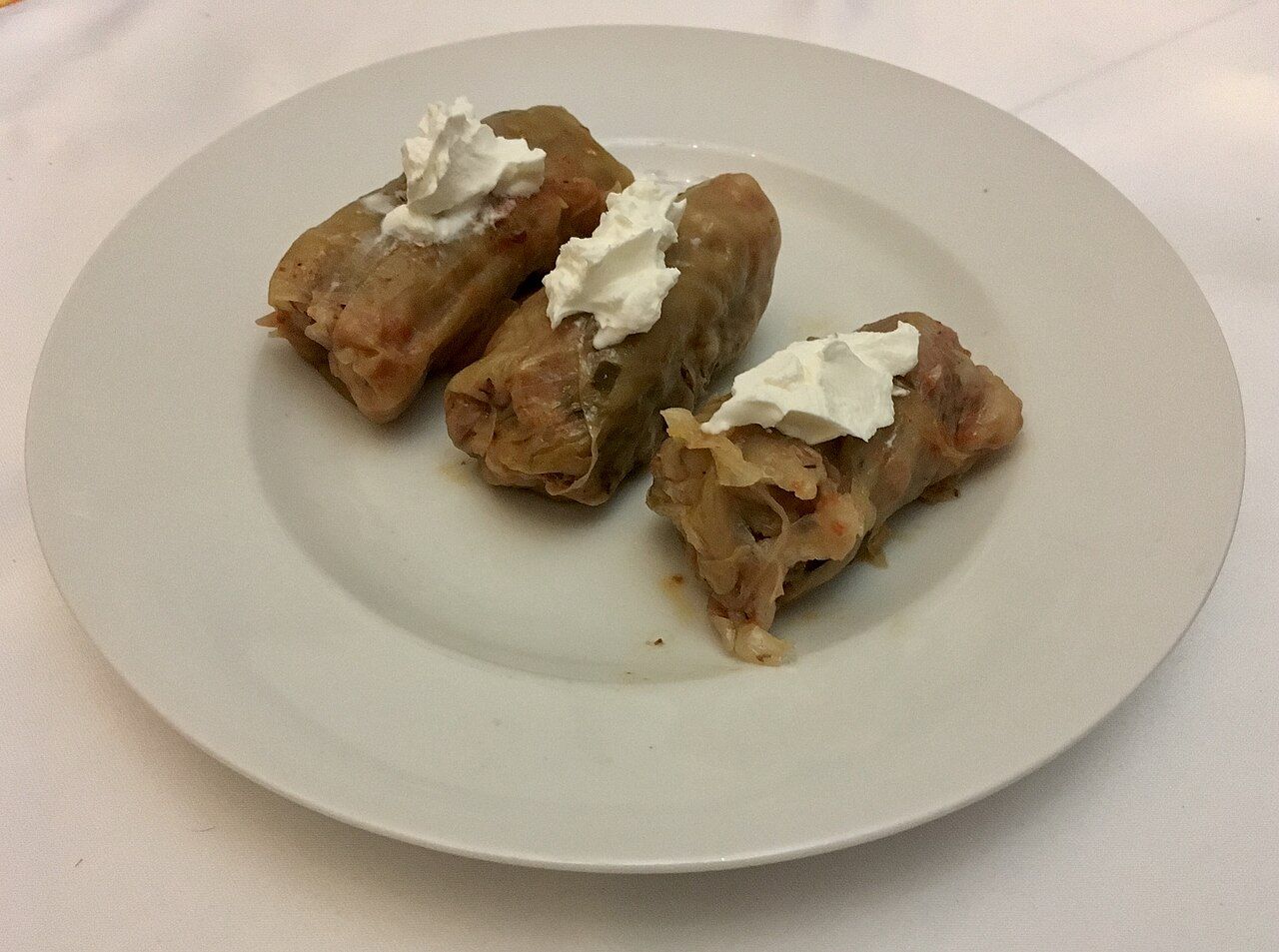
Sarmale are the dish of celebrations. Minced pork mixed with rice and onion is rolled in leaves of pickled cabbage, or in vine leaves, and cooked slowly, layered in a pot with smoked meat, tomato and dill. They are served with sour cream and almost always with mămăligă. They belong to Christmas and weddings, but you can find them on menus all year.
Mămăligă is maize porridge, cooked thick, turned out onto a board and cut with a thread. For a long time it was the staple of the poor, eaten in place of bread, and it remains the plain partner to richer food. On its own it is mild; with crumbled sheep's cheese, sour cream and a fried egg it becomes a dish of its own, sometimes called mămăligă cu brânză și smântână, and in the mountains it may be baked in layers with cheese. In Moldova the same dish comes with cheese, sour cream and pork crackling or a stew of meat on the side.
Further along the arcTrains, buses and the road between the two countriesMici, plăcinte and papanași
Mici, also called mititei, are small skinless sausages of minced meat, seasoned with garlic, pepper and herbs and grilled over charcoal. They are the food of summer gardens, May Day picnics and roadside grills, served with mustard and bread, and they are best straight from the fire.
Plăcinte are Moldova's signature pastry: thin dough stretched by hand, wrapped around a filling of soft cheese, potato, cabbage, pumpkin, apple or sour cherries, and baked in the oven or fried flat in a pan. In Romania the name covers a wider family of pies, and in the north-east, in the old Moldavian lands, they are much the same as across the border. You will find them at markets, in village houses and at almost every gathering, and they are often the best thing you eat all day.
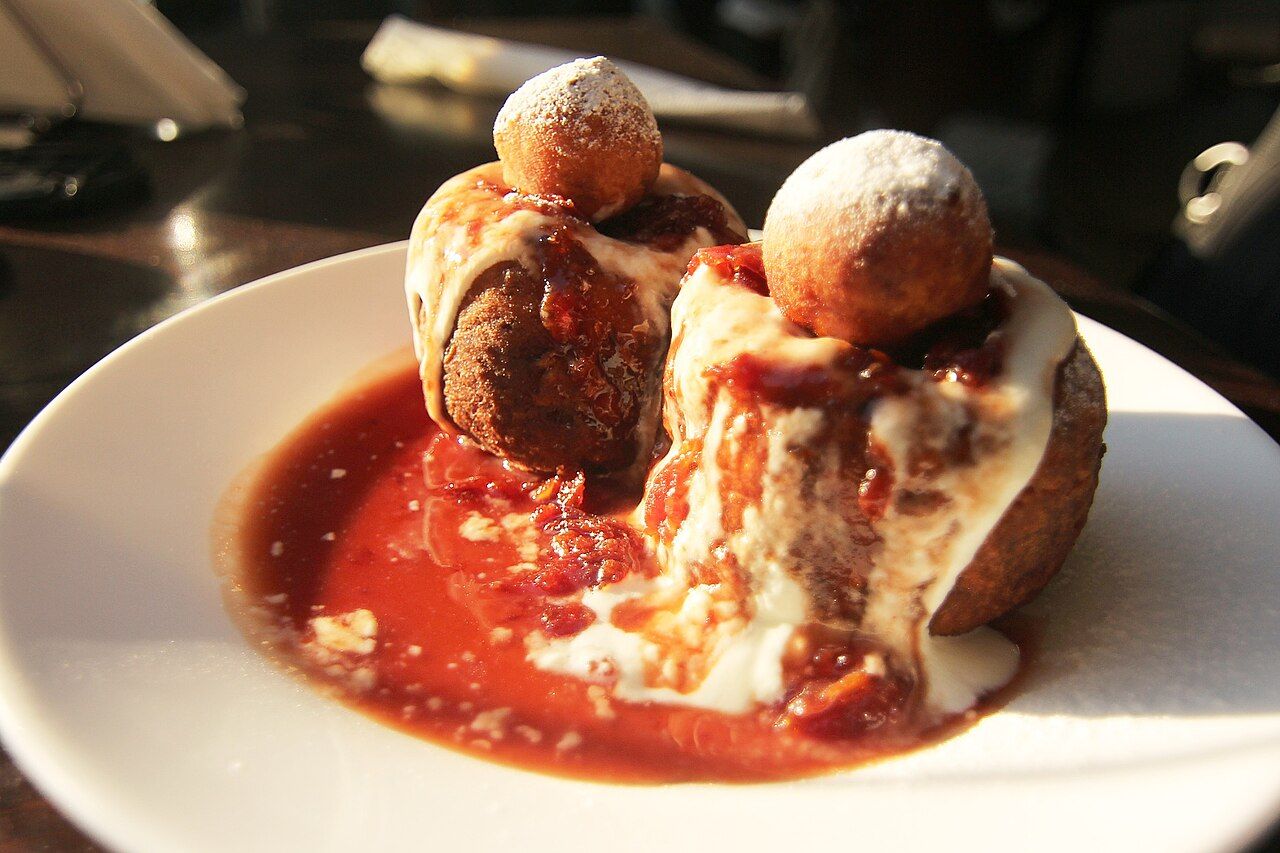
For dessert the favourite is papanași: doughnuts of soft fresh cheese, fried or boiled, topped with a smaller ball of dough, sour cream and a dark fruit jam, usually sour cherry or blueberry. They are big and filling, and sharing one is not a sign of weakness. Around Easter you will also meet cozonac, a sweet braided loaf with walnut filling, and pască, an Easter cake with sweet cheese.
Lent and fasting food
Most people in both countries are Orthodox Christians, and the church calendar shapes the table. Strict fasts come before Easter and Christmas, with shorter fasts during the year and on many Wednesdays and Fridays. Fasting in the Orthodox sense means no meat, dairy or eggs, and on some days no oil or wine, so a whole cuisine of food de post, fasting food, has grown up. Many people keep the fasts only in part, and some not at all, but the dishes are on menus everywhere during those weeks.
Look for sarmale de post filled with rice and mushrooms, fasole bătută, a purée of white beans topped with fried onion, zacuscă, a spread of roasted aubergine and pepper made in late summer and stored in jars, and vegetable stews. For a vegetarian or vegan visitor the fasting seasons are the easiest time to eat well. Just ask for de post.
Wine, spirits and the house
Wine comes from the household as often as from the shop. In the countryside of both countries many families make their own, and in Moldova it is almost the rule; read more in Moldova's wine country. Stronger drink is made from plums, as țuică, or distilled twice into a fiercer pălincă in Transylvania and Maramureș. It is offered as a welcome, often before food, in small glasses, and it is fine to sip slowly or refuse politely.
A few habits help at the table. Expect generous portions and a host who insists on more; a little left on the plate signals that you have had enough. Bread and pickles arrive without being ordered. Tipping in restaurants is customary in both countries, with no fixed rule. And market mornings, such as the central market in Chișinău, are the best place to see what is in season and taste cheese, honey and fruit straight from the villages.
The photographs on this page are credited, with their licences, on threads and photographers.