
Moldova · Orheiul Vechi
Orheiul Vechi, the cave monastery above the Răut
North of Chișinău the river Răut loops through a limestone gorge, and in its cliff monks cut cells and a church; around them lie the remains of a Getic fort and a Golden Horde town.
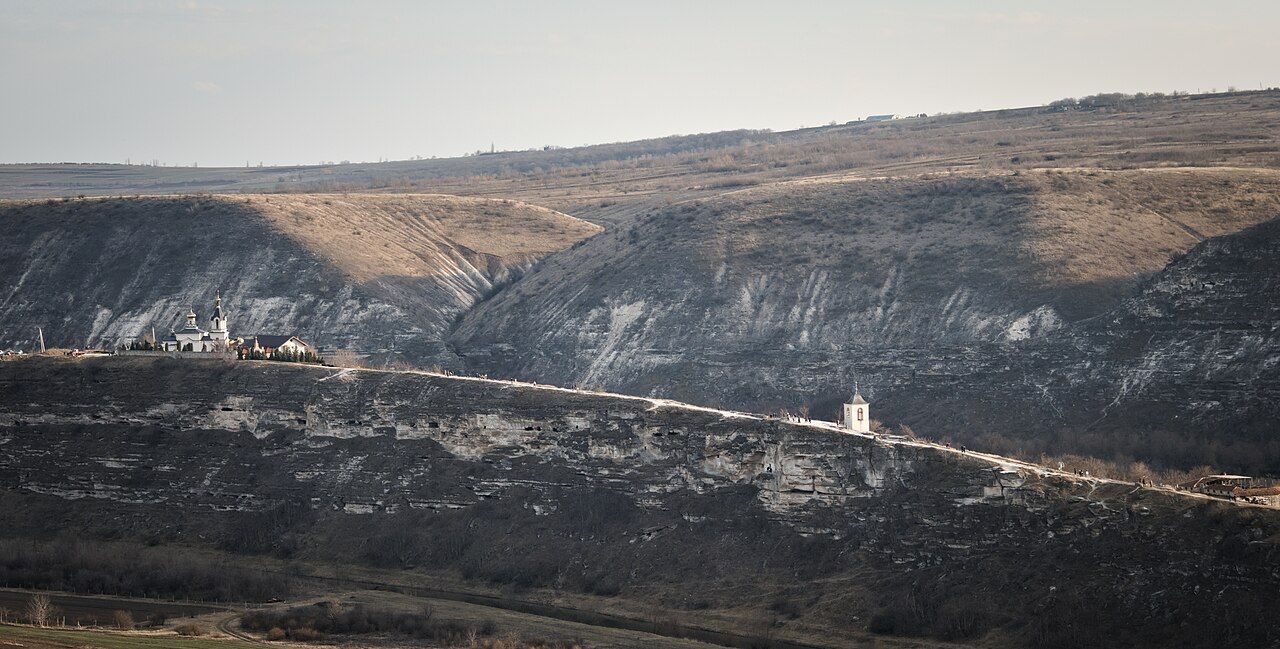
Orheiul Vechi, Old Orhei, is the best-known landscape in Moldova, and it earns the attention. North of the capital the river Răut, a tributary of the Dniester, cuts down into a plateau of pale limestone and swings through a series of tight loops. Between two of them it leaves a narrow ridge of rock with cliffs on both sides. People have used that ridge and the valley around it for more than two thousand years: as a fortified site, a trading town, a princely fortress and a place of prayer. The whole area is now protected as an archaeological and natural reserve, and the villages of Butuceni and Trebujeni sit inside it.
The name can confuse. The modern town of Orhei is a separate place, some way to the north-west on the same river. Orheiul Vechi is the old site in the gorge, and when people in Moldova talk about it they mean the cliffs, the monastery and the village together.
The gorge of the Răut
The first view is from the plateau above, where the road comes in. The ground falls away suddenly, and below you the Răut runs green and slow between fields and willows, bending back on itself under walls of grey and cream rock. On the far ridge you can make out the white church and bell tower, and along the cliff below them the dark openings of caves.
The rock here is soft limestone, laid down in an ancient sea, and it was easy to carve. The cliffs are full of holes: natural hollows, old quarries and cells cut by hand. Some are high and hard to reach, others open onto ledges with a path. Walking the rim of the ridge gives you the whole shape of the place, the river looping below and the plateau running off flat to the horizon. The edges are unfenced in many places, so keep back, take care with children, and avoid the rim in wet or windy weather.

The cave monastery
The heart of the visit is the cave monastery cut into the cliff below the ridge. The way in is a tunnel through the rock, entered from the top, with a stair dropping down into the hill. It opens into a small church carved out of the limestone, with icons on the walls, candles burning and a low ceiling of bare stone. Beyond it a narrow gallery leads to a balcony on the cliff face, open to the air, with the river far below.
Hermits and monks used caves along this valley from the medieval period, and the monastery was abandoned in the Soviet years, when religious life was suppressed. Monks returned after independence, and the church is once again in use. Above it on the ridge, the white church with its bell tower, built in the early 20th century, is the landmark you saw from the road.
This is a working place of worship. Cover your shoulders and knees; women are often asked to cover their hair, and wraps may be provided at the entrance. Keep your voice low in the tunnel and the church, do not use flash, and ask before photographing inside or photographing the monks. The rules are the same ones you will meet at the painted monasteries of Bucovina, and they are kept more strictly here because the space is so small.

Getae, the Golden Horde and Moldavia
Orheiul Vechi is not only a monastery. The ridge and the plateau hold the traces of three very different worlds, and much of the site has been excavated.
The oldest are Getic: the Getae, a people related to the Dacians, built a fortified settlement on the promontory above the river several centuries before Christ, with earth ramparts and ditches still visible in places. Then, in the 14th century, came a town of the Golden Horde, the Mongol state that controlled the steppe north of the Black Sea. It is known from its coins as Shehr al-Jedid, the New City, and archaeologists have found the remains of bath houses, a mosque, a caravanserai and houses. It was a trading town on the routes across the steppe, and it lasted only a few decades.
Further along the arcSoroca fortress and the DniesterAfter the Horde withdrew, the princes of Moldavia took over the site, and in the 15th and 16th centuries Orhei was a fortress and an administrative seat. The long rectangular stone walls you can see on the plateau belong to this later fortress, built over the earlier citadel. When the Moldavian capital and its trade routes moved elsewhere, the town declined and its people moved up the river, to the place that became modern Orhei.
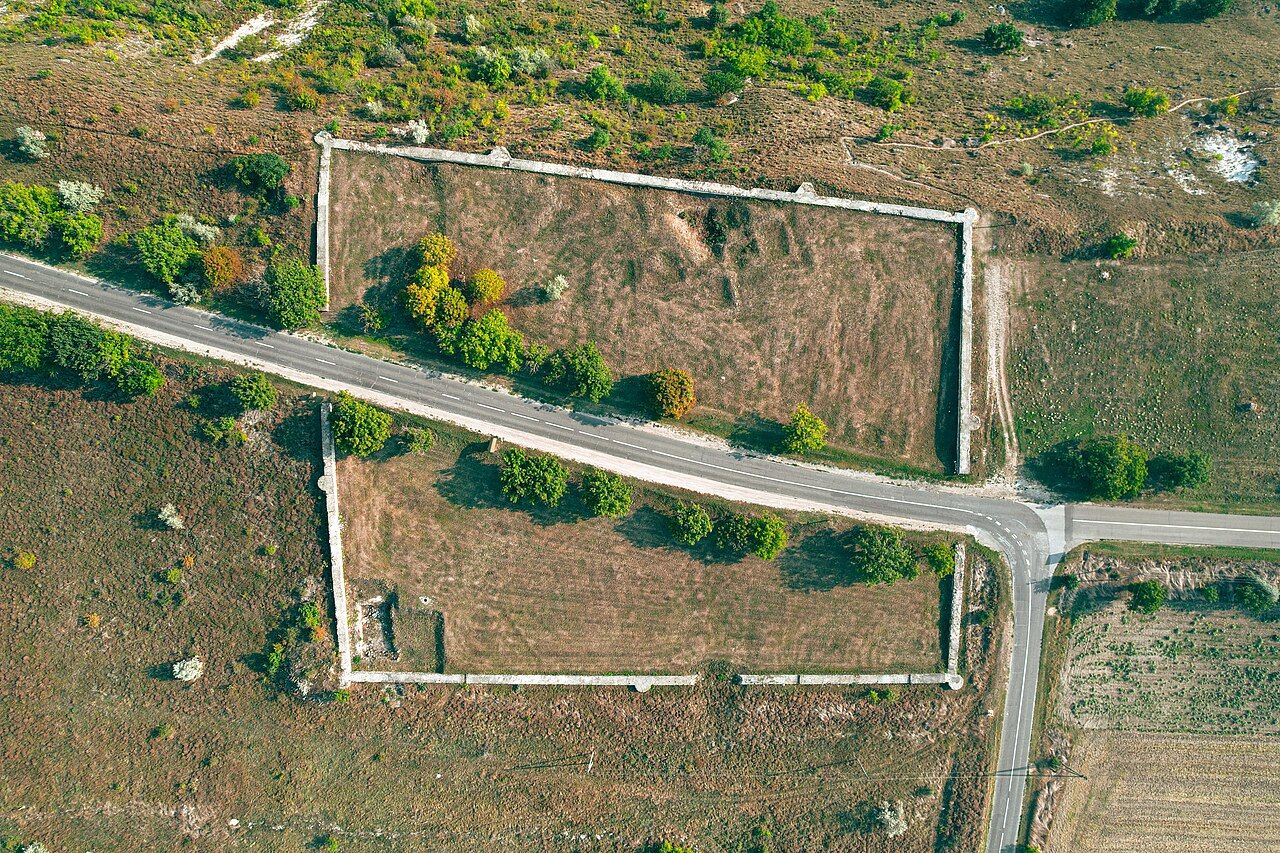
The ridge and the plateau hold the traces of three very different worlds, and much of the site has been excavated.
A small visitor centre near the entrance to the reserve explains the layers with maps, finds and models, and it is worth a look before you walk. Signs on the site itself are limited, so the background helps.
Butuceni village
Below the ridge, along the river, Butuceni is a long single-street village of low houses with deep porches, painted walls and stone gates. Many houses have been restored, and several now take guests or serve meals in their courtyards. The village has kept the look of a Moldovan rural settlement more completely than most, with wine cellars cut into the hillside behind the houses and gardens running down to the water.
One old farmhouse is kept as a small museum of village life, with woven rugs, embroidered cloths, a clay stove and the tools of the household. Food served in the village is the home cooking of the region: plăcinte, the thin filled pies, mămăligă with cheese and sour cream, soups soured with borș, and home-made wine. For more on what turns up on the plate, see the Romanian and Moldovan table.

Orheiul Vechi on foot
Orheiul Vechi is an easy day from Chișinău, about an hour by road. Staying overnight in Butuceni gives you the gorge in the quiet of the early morning and the evening, which are the best hours for light on the cliffs.
Late spring and early autumn are the most comfortable seasons. Summer is hot on the open plateau and there is little shade, while winter can be bitter, with paths icy on the slopes. Wear shoes with grip for the rock steps, carry water, and allow time to walk the ridge and the valley, not only the monastery. There is usually a modest charge for the reserve and its museum.
From here it is a natural next step north to the Dniester, where Soroca's round fortress and the cliff monasteries of Saharna and Țipova continue the story of rock, river and faith.

The photographs on this page are credited, with their licences, on threads and photographers.