
Bucharest and Wallachia · Bucharest
Bucharest, between the boulevards
Romania's capital mixes Belle Époque mansions, Orthodox churches, communist blocks and one of the largest buildings on earth, and it rewards those who walk it street by street.

Bucharest is not a city that tries to please at first sight. It is big, loud and full of traffic, and its centre was partly torn down in the 1980s. Give it two or three days, though, and the layers show: the small brick churches tucked into courtyards, the mansions built when Bucharest wanted to be the Paris of the Balkans, the grey blocks and wide avenues of the communist years, and the cafes and terraces of a capital that has changed fast since 1989.
The city lies on the plain of Wallachia, on the small Dâmbovița river, a long way south of the mountains. Most of what you will want to see lies along or near a north to south line from the Palace of the Parliament through the old town and up Calea Victoriei to the parks in the north.
The Palace of the Parliament
The Palace of the Parliament is the building most visitors come to see, and it is hard to miss. It was begun in the 1980s under Nicolae Ceaușescu as the House of the People, the centre of a new civic district. To make room for it, a large area of old Bucharest, with homes, churches and a monastery, was demolished, and tens of thousands of people were moved. It is one of the largest administrative buildings in the world, built of Romanian marble, wood and crystal, and it now houses both chambers of the parliament and a museum of contemporary art.
Inside, visits are by guided tour, and you are usually asked to bring photo ID and to book ahead. Even from outside, walking around it and down the long boulevard in front gives you a sense of the scale of what was built and what was lost.
The old town and its churches
North of the river, the old town around Lipscani street is the part of Bucharest that survived the demolitions. Its narrow streets were once full of merchants and craftsmen, and many are named after their trades. Today they are packed with bars and terraces, loud at night and quieter in the morning, when it is easier to see the buildings.
Look past the terraces for the ruins of the Old Princely Court, Curtea Veche, where the princes of Wallachia once lived, and its church, one of the oldest in the city. Nearby, Stavropoleos Church, from the early 18th century, is a small masterpiece of the Brâncovenesc style, with carved stone columns, a painted porch and a quiet courtyard lined with old gravestones. Be quiet inside, cover your shoulders and knees, and ask before taking photographs.
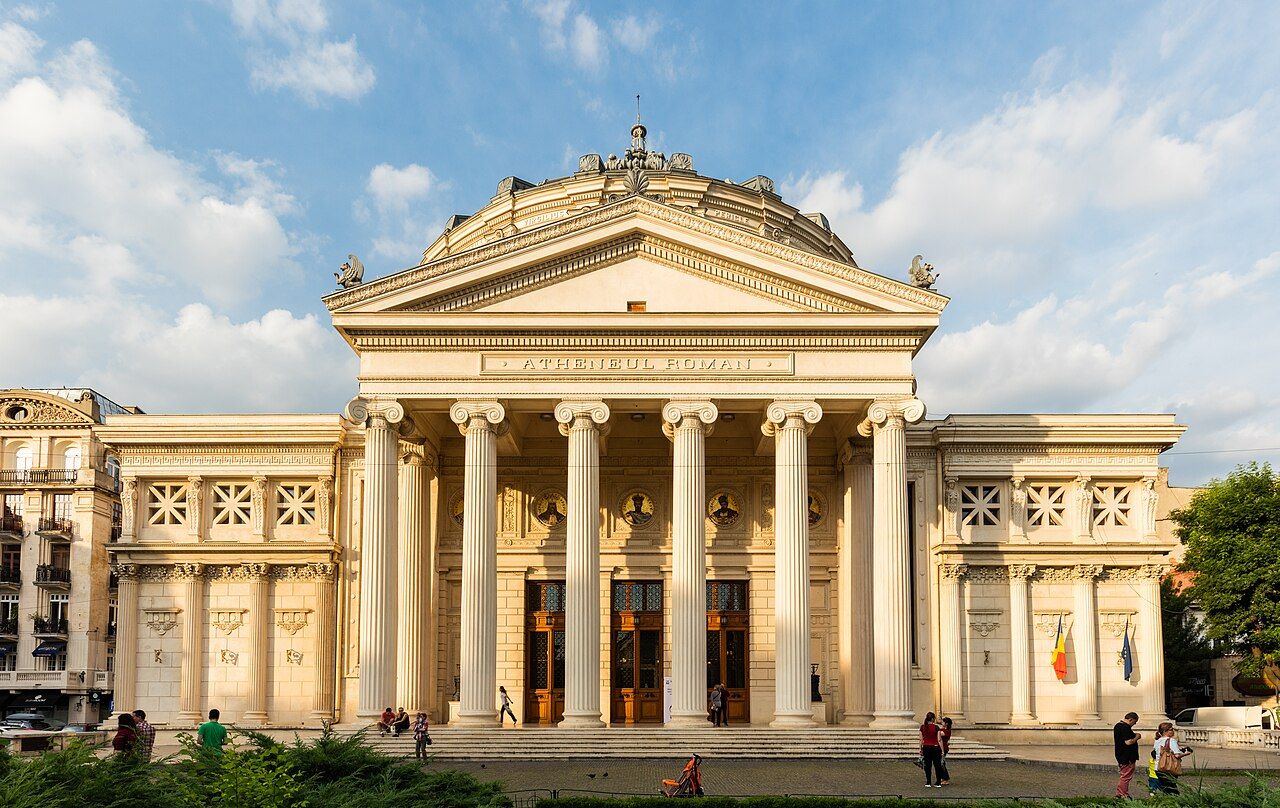
Calea Victoriei and the Athenaeum
Calea Victoriei is the city's old high street, laid out at the end of the 17th century as a road of wooden planks and later renamed to mark the victory in the war of independence of 1877 to 1878. Walking its length from the river north is the best single way to understand Bucharest. You pass banks and palaces from the late 19th century, churches, apartment blocks, the national history museum in the old post office and the former royal palace, which now holds the national art museum.
Walking its length from the river north is the best single way to understand Bucharest.
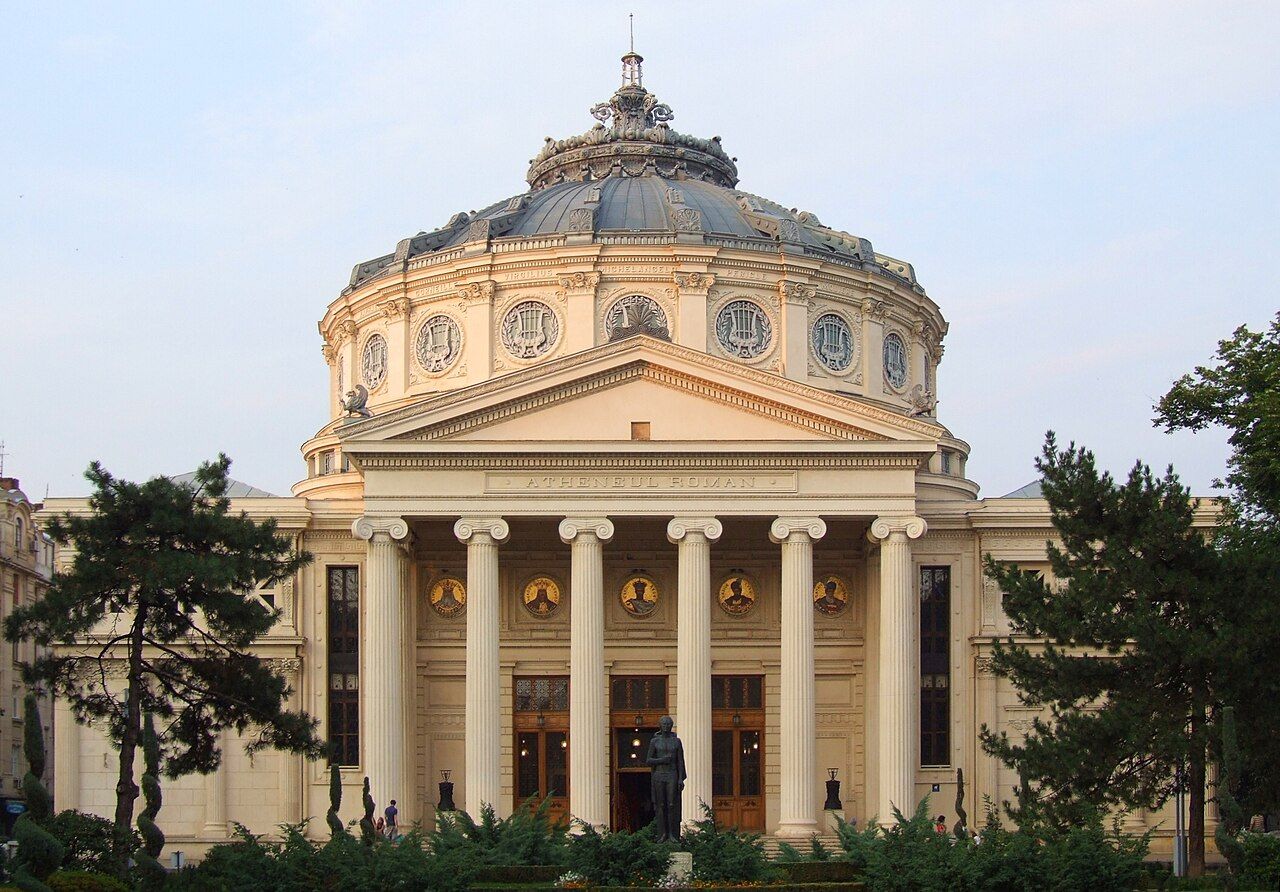
Across from the old royal palace, the Romanian Athenaeum is the city's best-loved building. It is a domed concert hall in a classical style, opened in 1888 and paid for partly by a public appeal, and it is home to the George Enescu Philharmonic. Inside, a long painted frieze runs round the concert hall and tells the history of the Romanian lands. If you can, go to a concert; if not, the square and garden in front are a good place to sit.
Further along the arcSinaia and Peleș CastleFurther north, the street grows grander. The Cantacuzino Palace, built in the early 20th century for a wealthy politician, has a great shell-shaped canopy over its entrance and now holds the George Enescu National Museum, devoted to the composer. Side streets off this stretch lead into quiet quarters of villas and small embassies, with gardens behind iron railings, where the city's old ambition to look like Paris is easiest to see. The street ends at Victory Square, Piața Victoriei, by the government building, where the boulevards turn north towards the parks.
Revolution Square and 1989
Next to the Athenaeum, Revolution Square was the stage for the end of the communist regime. On 21 December 1989, Ceaușescu spoke from the balcony of the Central Committee building to a crowd that turned against him. The next day he fled from the roof by helicopter, and he and his wife were tried and executed a few days later. More than a thousand people died across Romania during those days.
A memorial to the victims stands in the square, and plaques and crosses mark places in the area where people were killed. University Square, a short walk east, was also a site of the fighting and of later protests. You can read the bullet marks on some buildings if you look for them. The story is still close and still argued over, and it helps to read about it before you go.
Parks and the Village Museum
Bucharest is greener than it first looks. Cișmigiu Garden, close to the centre, is a 19th-century park with a lake, old trees and shaded paths. To the north, beyond the Arc de Triumf, the big park named after King Michael I, long known as Herăstrău, wraps around a lake and fills with walkers and cyclists at weekends.
On the edge of that park, the Dimitrie Gusti National Village Museum is one of the best things in the city. Founded in the 1930s, it gathers houses, churches, mills and farm buildings brought from villages across Romania, and walking through it is a quick introduction to the country's regions. Look for the wooden churches of Maramureș and the houses from the Danube Delta. Nearby, the Museum of the Romanian Peasant, in the centre, tells the same story through objects, textiles and icons.
Bucharest is the hub for trips into the rest of the country. The Prahova valley and Sinaia are close enough for a day, and the trains and buses fan out north to Brașov, east to the coast and towards Moldova. Inside the city, the metro is the easiest way to cover the longer distances, and walking does the rest.
Summers on the plain are hot, often very hot, and the city empties a little in August as people head for the mountains and the sea. Spring and autumn are the best times to walk it, with the parks green and the terraces full. Winters are cold and grey, with occasional snow, but they bring concerts, the Christmas market and the city to yourself. Give it at least two full days, and do not judge it on the drive in from the airport.
The photographs on this page are credited, with their licences, on threads and photographers.