
Transylvania · Brașov
Brașov under Tâmpa
A walled Saxon trading town in a bowl of mountains, with a fire-blackened Gothic church, a very narrow lane, a Romanian quarter beyond the gates and a forested peak you can ride or walk up.
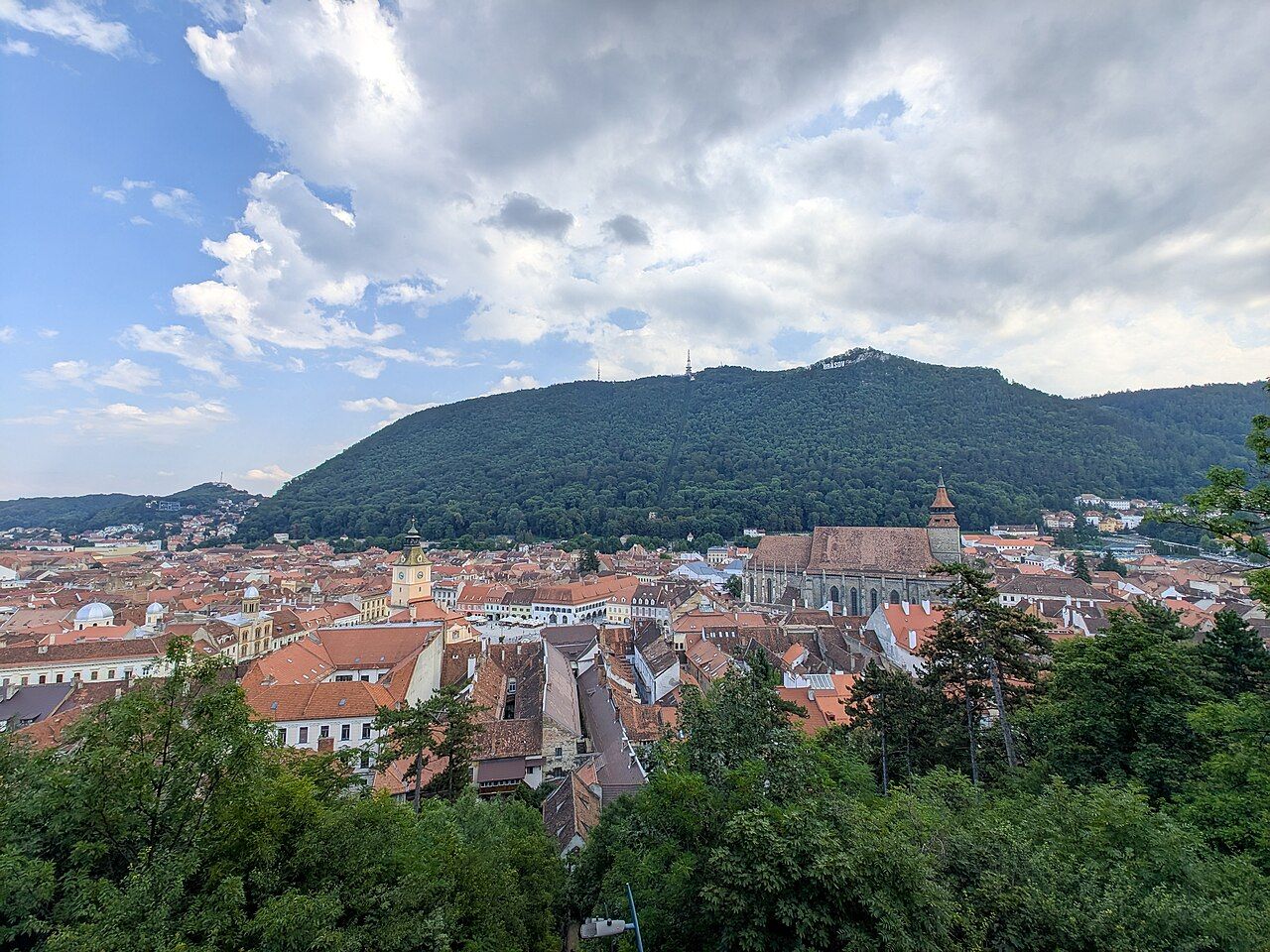
Brașov fills the mouth of a valley where the Carpathians bend, with Tâmpa rising straight behind the old town's walls and the peaks of Postăvarul and Piatra Mare beyond. It was Kronstadt to its Saxon founders and Brassó in Hungarian, and for centuries it was one of the great trading towns of the region, sitting on the routes that crossed the mountain passes between Transylvania and Wallachia. The walls, the market square and the big Gothic church all come from that trade.
Today Brașov is a large city with industrial suburbs, but the old centre is held tightly between the hills and is easy to explore on foot. The Romanian quarter of Schei, the walls and bastions, and the forest paths on Tâmpa are all within a short walk of Council Square.
The Black Church
Biserica Neagră, the Black Church, is one of the largest Gothic churches in south-eastern Europe. It was built from the late 14th century through the 15th as the town's main Catholic church, dedicated to the Virgin Mary, and became Lutheran with the Reformation, which in Brașov was led in the 16th century by the scholar Johannes Honterus; his statue stands beside the church. The name comes from the Great Fire of 1689, which swept through the town and blackened its walls.
Inside, the walls are pale and the light is plain. The colour comes from a large collection of Anatolian carpets, given to the church over generations by Saxon merchants who traded with the Ottoman lands and hung along the galleries and pews. The church also has a large organ, and concerts are held in the warmer months. It is a working Lutheran church that charges visitors a fee and keeps set hours.
Council Square and Rope Street
Piața Sfatului, Council Square, was the market square of the walled town. The Council House, Casa Sfatului, stands in the middle with its watch tower; it was the seat of the town's elected leaders and is now a history museum. Around the edges are tall merchants' houses and the long Hirscher House, built in the 16th century as a covered hall for traders. Strada Republicii, the main pedestrian street, runs north from the square between old facades, and it is where much of the town comes to walk in the evening.
A short way south-west, Strada Sforii, Rope Street, is a lane little more than a metre wide between two rows of houses, said to have been made as a passage for firefighters. It is often called one of the narrowest streets in Europe, and at busy times you queue to walk through it. Go early or late and you can see it as it was meant to be, a shortcut between two parallel streets.
Walls, bastions and Schei
Brașov's walls were built and rebuilt from the 14th to the 17th century, and each stretch was the responsibility of a guild, which built and manned its own bastion. The best preserved is the Weavers' Bastion, with wooden galleries rising in tiers, now a museum with a model of the old walled town. A path runs along the foot of the walls between the town and the forest of Tâmpa, and from it the Black Tower and the White Tower are a short climb away, both with views over the roofs.
On the south-west side, Catherine's Gate, Poarta Ecaterina, is a small 16th-century gate tower with four corner turrets. Beyond it, the Schei Gate leads into Șcheii Brașovului, the old Romanian quarter. For a long time Romanians could not own property inside the Saxon walls, so they built their own district in the valley outside. Its centre is the Church of St Nicholas, an Orthodox church in a walled yard, and beside it the First Romanian School, now a museum that keeps old books and the memory of the deacon Coresi, who printed some of the first books in the Romanian language in Brașov in the 16th century.
Further along the arcSighișoara's citadelSchei tells the story of a town shared by communities that lived side by side and often apart. Saxons, Romanians and Hungarians each had their own churches, schools and quarters. Today you hear mostly Romanian on the streets, some Hungarian, and in the Lutheran churches still a little German.
For a long time Romanians could not own property inside the Saxon walls, so they built their own district in the valley outside.
Up Tâmpa
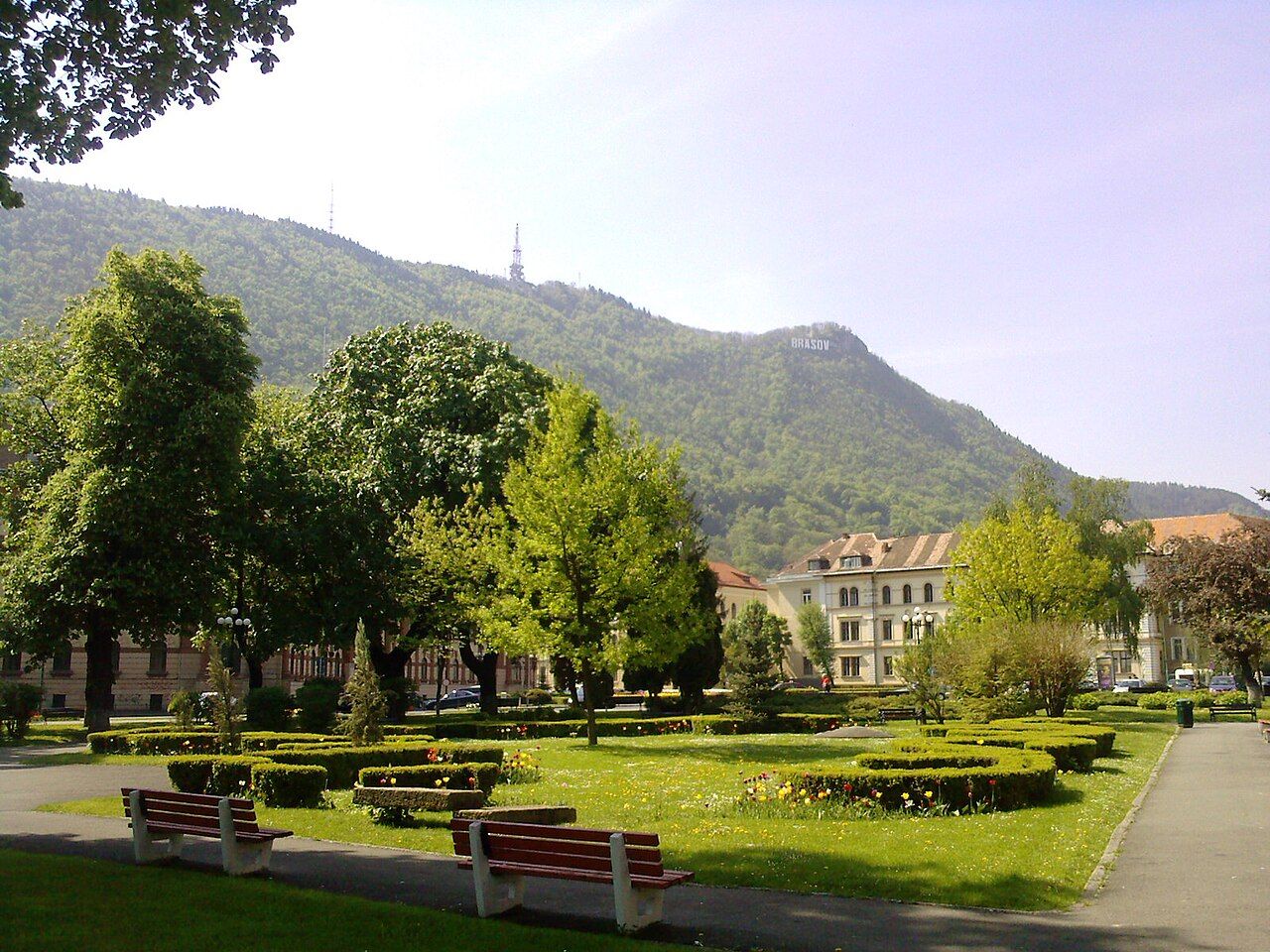
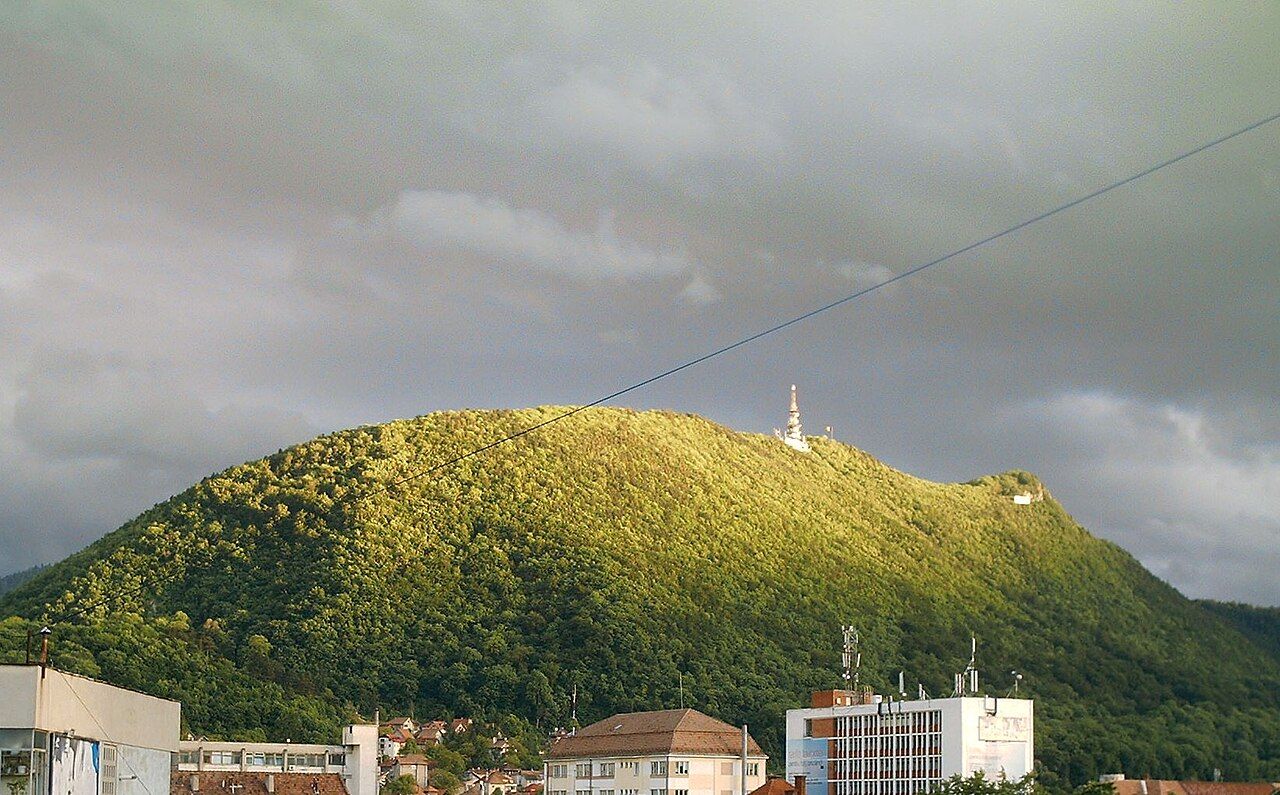
Tâmpa rises roughly 400 metres above the old town. It is a nature reserve, covered in beech and other broadleaf forest, and a row of white letters spelling the city's name stands near the top, visible from the whole centre. A cable car climbs from the foot of the walls to a station near the summit, and from there a short walk brings you to viewpoints over the town and the Bârsa plain.
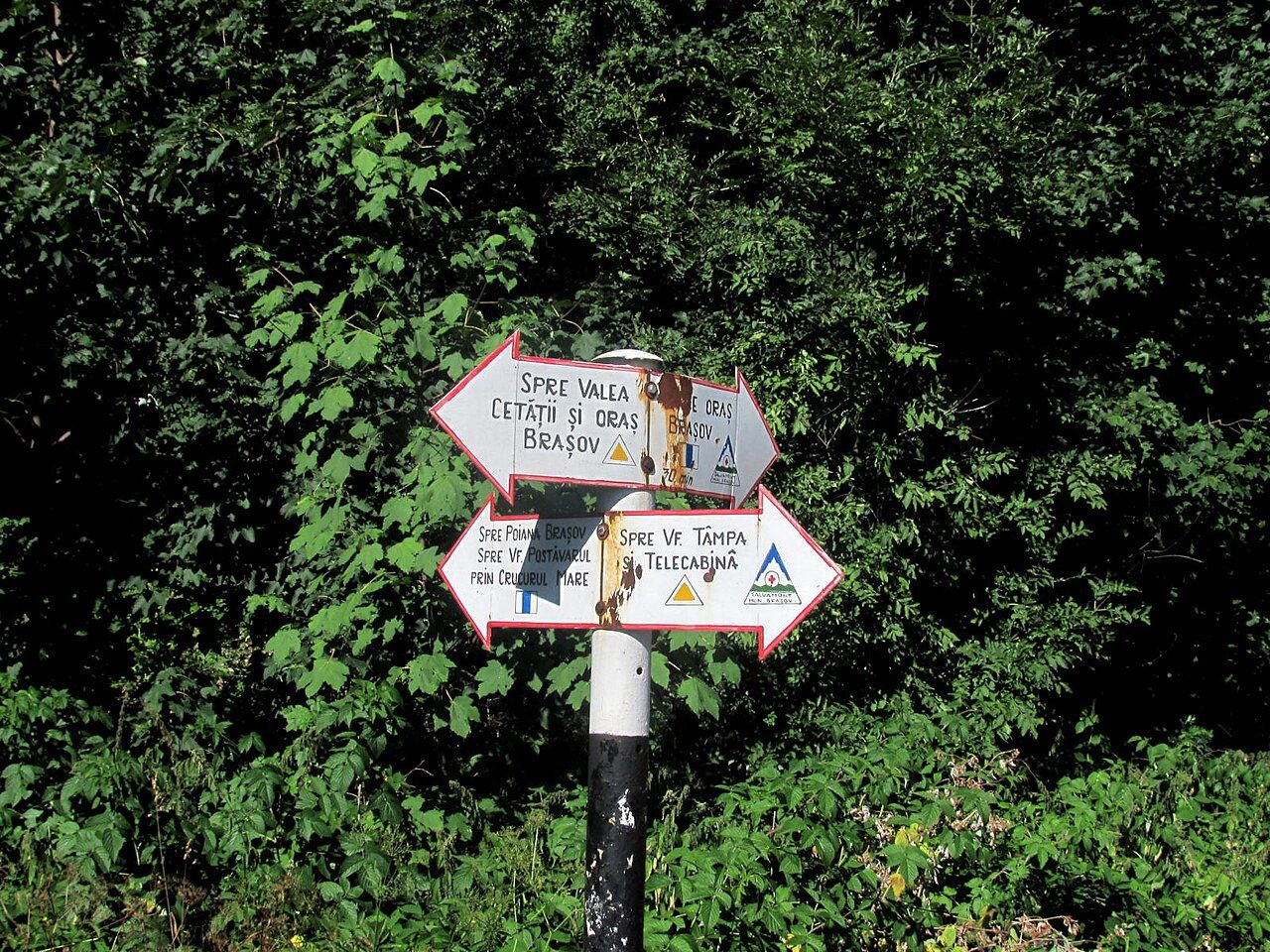
You can also walk. Several marked trails climb from the old town; the best known is a long zigzag path with many switchbacks, which takes about an hour at a steady pace. The paths are well used but steep in places, with roots and stone steps, and they can be slippery after rain. Waymarks painted on trees and rocks, and old metal signposts at junctions, show the routes and their colour codes.

Brown bears live in the forests around Brașov and are sometimes seen at the edges of the city. Do not feed them, do not approach them, keep food and rubbish packed away, and follow any warnings posted at trailheads or given by local authorities. On Tâmpa the chance of meeting one is small, but the rule is the same everywhere in these mountains.
Beyond the walls
Brașov is the hub of the Bârsa Land, Țara Bârsei, and many good day trips start here. Bran Castle and the Râșnov citadel lie to the south-west, the church fortresses of Prejmer and Hărman to the north-east (see the Saxon fortified churches), and the royal castle at Sinaia across the pass to the south. Poiana Brașov, a mountain resort above the city, is the place for skiing in winter and walking in summer.
Trains run between Bucharest and Brașov through the Prahova valley, and the crossing of the mountains is one of the finest rail journeys in the country, though the road through the same valley can be slow at weekends and holidays. Allow two days for the town, and more if you want to walk on Tâmpa and add a day trip or two.
The photographs on this page are credited, with their licences, on threads and photographers.