
Maramureș and Bucovina · Maramureș
The wooden churches of Maramureș
In Romania's far north, villages build in wood: tall-spired churches, huge carved gates, haystacks on poles. Eight churches are on the UNESCO list, and the Merry Cemetery jokes about death.

Maramureș lies in the far north of Romania, against the border with Ukraine and beyond the arc of the Carpathians, in a ring of hills and mountains drained by the Iza, the Mara and the upper Tisa. It was never conquered by the Romans and was always at the edge of the great kingdoms, and its villages built with what the forests gave them. The result is a wooden landscape: houses, barns, fences, gates and churches made from oak and fir.
It is easy to romanticise the region, and many people do. Life here is hard, young people leave to work abroad, and new houses in brick and coloured tiles rise next to old wooden ones. What makes Maramureș worth the long journey is the craft and care that remain alongside those changes, not a frozen past.
The UNESCO churches
Eight wooden churches in Maramureș are on the UNESCO World Heritage list: Bârsana, Budești, Desești, Ieud, Plopiș, Poienile Izei, Rogoz and Șurdești. Most were built in the 17th and 18th centuries, when the Orthodox Romanians of the region were not allowed to build churches in stone. They answered with timber, and with height.
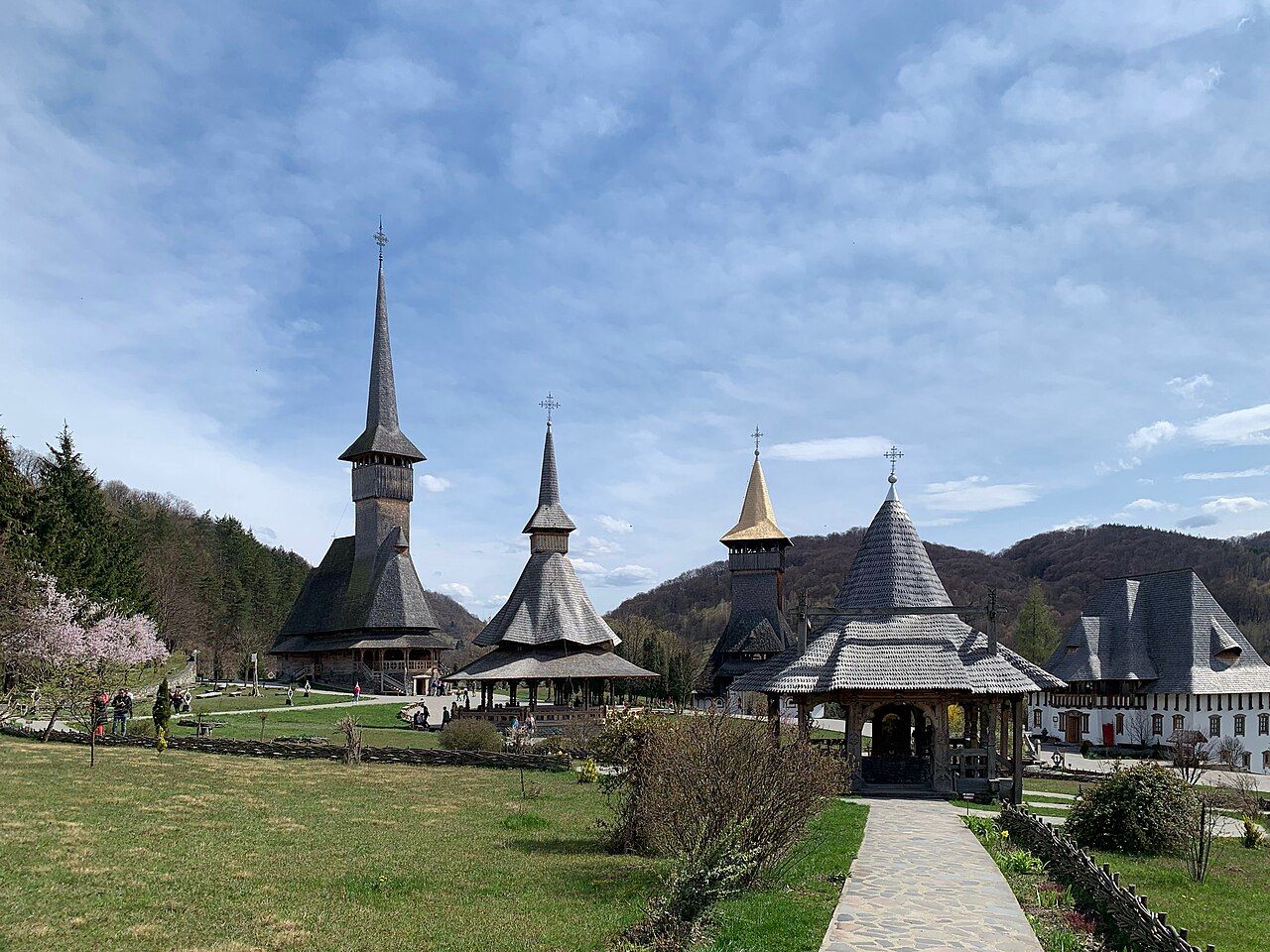
The churches share a form. A log nave sits on a stone base, under a steep shingled roof that often comes down in two tiers. Above the west end rises a slim bell tower with a needle spire, sometimes with four small corner turrets around its base. The tallest spires reach far above the village roofs and can be seen from across the valley. Inside, the walls are covered with paintings on wood or on canvas, made by village painters in a direct, colourful style, with the Last Judgement, saints and scenes from the Bible.
The churches are still used. Some are kept locked, and you may need to ask in the village for the person who holds the key. Dress modestly, cover your shoulders and knees, and women may be asked to cover their heads. Be quiet, avoid visiting during services unless you join them respectfully, and ask before taking photographs inside, where light can damage the paint.

Bârsana and the new wooden churches
The wooden tradition did not end. At Bârsana, alongside the small UNESCO-listed church in the village, a new monastery was built from the 1990s on a hillside in the Iza valley. Its tall wooden church, bell tower, gate and other buildings are set in gardens with paths and flowers. It is one of the most visited places in Maramureș, and it shows that the craft of building in timber is alive. Other villages have new wooden churches too, some of them very large.
The old churches are smaller, darker and more worn, and to understand the region you should see at least one of them as well as the new monastery.
Gates, haystacks and Sunday clothes
The great carved gates are the other emblem of Maramureș. A wealthy family might once have commissioned a gate that was worth more than the house behind it. They have a small door for people and a wide one for carts, all under a little shingled roof, and their posts are carved with twisted rope, the tree of life and sun symbols. New ones are still being made.
A wealthy family might once have commissioned a gate that was worth more than the house behind it.
In summer you will see hay made by hand on steep meadows and stacked on poles to dry in tall, rounded heaps. On Sundays and feast days many people, especially older people, still wear traditional clothes to church: white shirts, embroidered waistcoats, and in some villages small straw hats for men. Treat this as people's everyday life, not a show, and ask before photographing anyone.
Further along the arcThe painted monasteries of Bucovina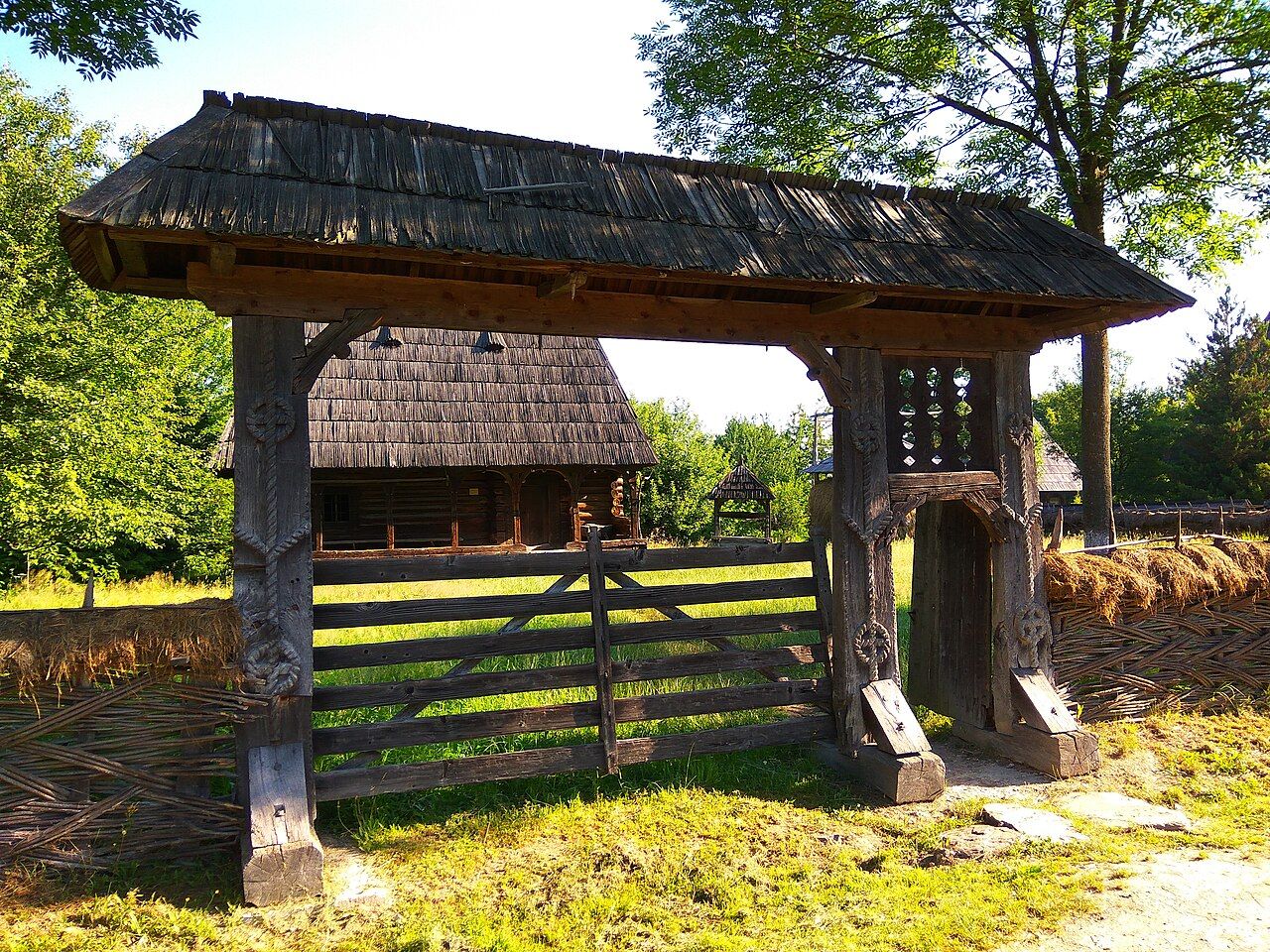
Săpânța and Sighetu Marmației
In the village of Săpânța, near the Tisa, the Merry Cemetery is famous across Romania. From the 1930s a local carver, Stan Ioan Pătraș, began making wooden grave crosses painted in a bright blue with a carved picture of the dead person and a short verse. The verses, written as if the dead were speaking, tell of their work, their habits, their faults and how they died, often with dry humour. His apprentices continued the work after his death. It is a cemetery still in use, so walk quietly and keep to the paths.
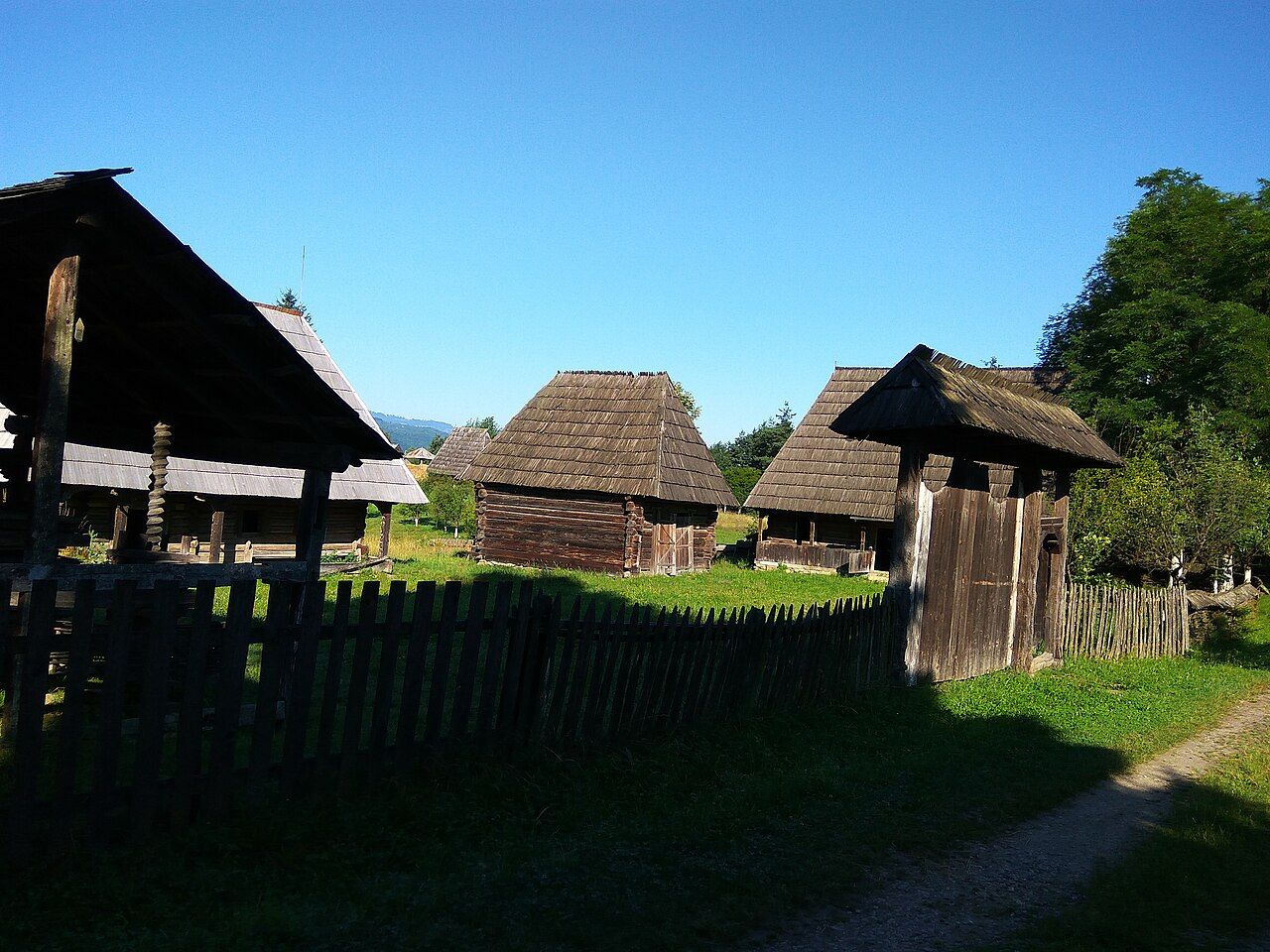
The nearby town of Sighetu Marmației has an open-air village museum with old houses, gates and a wooden church brought from around the region. It also holds the Memorial of the Victims of Communism, in the former prison where many of Romania's political and church leaders were held and died after 1948. It is sombre and essential.
The Iza valley by road
The Iza valley, running south-east from Sighetu Marmației, holds several of the listed churches and is the best single route through the region. Vadu Izei, at the mouth of the valley, has carved gates along the road. Further up, side roads lead to Ieud, whose old wooden church stands on a rise above the village, and to Botiza and Poienile Izei, where the church interior is known for vivid scenes of the punishments of hell, painted as a warning to the congregation. Bârsana and Rozavlea lie on the main road, and Șurdești and Plopiș are in the hills to the west, towards Baia Mare.
Drive slowly in the villages. Children, carts, cows and geese share the road, and in summer horse-drawn carts loaded with hay are common. In some villages you can still see wooden water-powered pools where heavy woollen cloth is washed and softened in the old way. Shops are small and cash is useful, as cards are not taken everywhere.
A narrow-gauge forest railway with steam engines runs up the Vaser valley from Vișeu de Sus in the warmer months, carrying visitors and timber workers into the mountains.
On the way to Maramureș
Maramureș is a long way from everywhere. Baia Mare and the airport there are the usual gateways from the south, with Cluj-Napoca a few hours further on. The routes into the region cross passes, such as Gutâi from Baia Mare, and the Prislop pass leads east towards Bucovina and its painted monasteries. A car makes it far easier to reach the churches, which are spread over several valleys, and public buses between villages are infrequent. For trains and longer routes, see getting around.
Give the region at least three days. Village guesthouses are the usual places to stay, and many serve home-cooked food; there is more on it in the Romanian table. Late spring and early autumn are the best seasons, with hay in the fields and fewer visitors, and the winter festivals around Christmas and New Year are strong here too.
The photographs on this page are credited, with their licences, on threads and photographers.