
Transylvania · Biertan
The Saxon fortified churches
Across southern Transylvania, Saxon villages turned their churches into fortresses, with ring walls, towers and storerooms. Many villages emptied after 1990, but the churches still stand, and many still open their doors.

Drive the back roads between Sibiu, Sighișoara and Brașov and every few villages the same shape appears on a rise: a church tower behind a ring of high walls, with smaller towers at the corners and a gate tunnel leading in. These are the fortified churches of the Transylvanian Saxons, and more than a hundred of them survive in some form. They are among the most remarkable buildings in Romania, and some of the least visited.
The Saxons came from the Rhine and Moselle lands in the 12th and 13th centuries, invited by the kings of Hungary to settle and defend the south-east edge of the kingdom. They farmed, traded and governed themselves through their own institutions, and in time they became Lutheran. Their villages were laid out along a main street, with houses gable-end to the road and a church in the middle. From the 15th century, as raids came more often through the mountain passes, those churches were turned into fortresses.
Why a church became a fortress
A village could not afford a castle, and a castle belonged to a lord. The church was the one large stone building every village had, built by the community and standing on its best ground. So the villagers wrapped it in walls, raised towers, cut arrow slits and built galleries above the vaults from which defenders could drop stones or pour boiling liquid on attackers. Inside the walls they built storerooms, one for each family, where grain, bacon and other food was kept so that people could hold out through a siege.
The threat was real. Ottoman and Tatar raids crossed the Carpathians repeatedly in the 15th and 16th centuries, burning villages and taking captives. A fortified church could not stop an army, but it could shelter a village for days or weeks until the raiders moved on. In many churches one tower was set aside for smoked bacon, and families went in on a set day each week to cut their share, a custom that lasted long after the raids ended.
A fortified church could not stop an army, but it could shelter a village for days or weeks until the raiders moved on.
Biertan
Biertan stands in a valley north of the main road between Sibiu and Sighișoara, its church on a hill inside three rings of walls. It was the seat of the Lutheran bishops of Transylvania from the 16th century to the 19th, and the church is a large late-Gothic hall with a carved and painted altarpiece of many panels and a sacristy door fitted with an elaborate lock of many bolts. Biertan was listed by UNESCO in 1993, and the listing was later extended to six more villages with fortified churches.
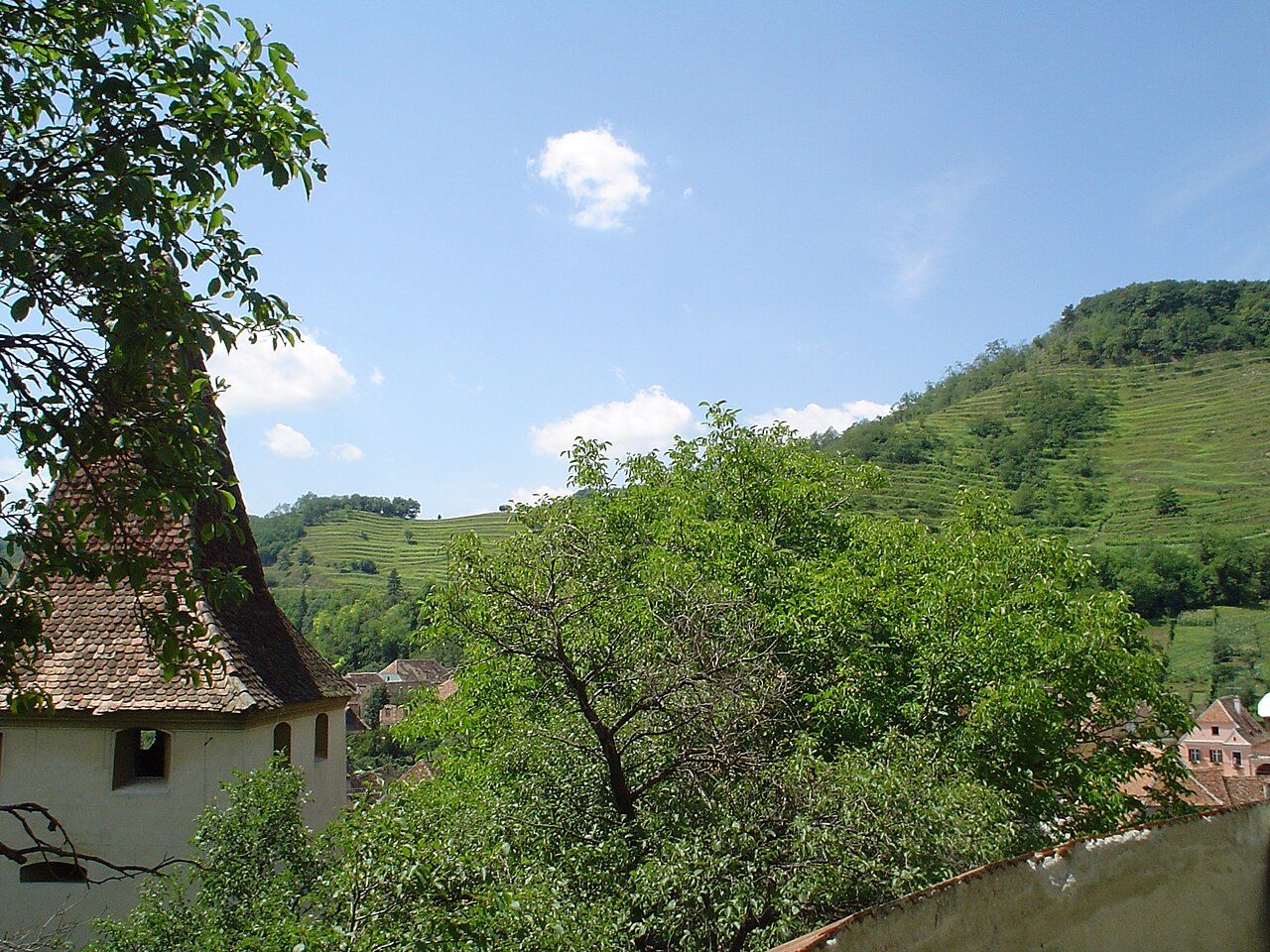
Biertan's best-known story concerns a small room in one of the towers. The village says that couples who wanted to divorce were shut in there together, with one bed and one plate, until they changed their minds. Take it as a village tale; it is told with a smile. The hills around were once covered in vineyards, and you can still see the old terraces on the slopes.
Viscri
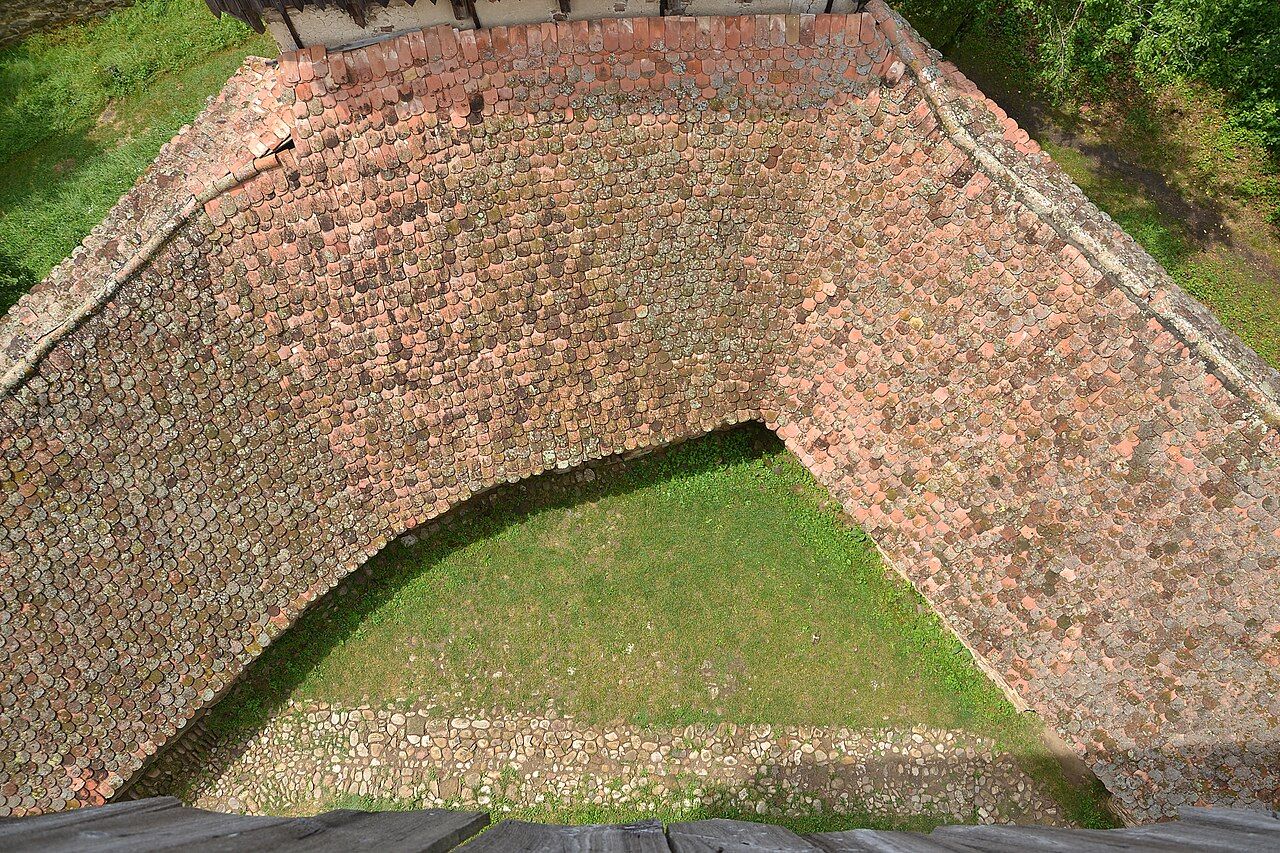
Viscri lies at the end of a long road in the hills between Sighișoara and Brașov, a single main street of coloured houses with a stream running beside it. Its church is smaller and plainer than Biertan's, white-walled, with a tall tower and a wooden gallery under the roof. It grew from a small early chapel and was fortified over the centuries, and today the storerooms and towers hold a small museum of Saxon village life. From the top of the tower you look down on the tiled roofs, the inner walls and the fields beyond.
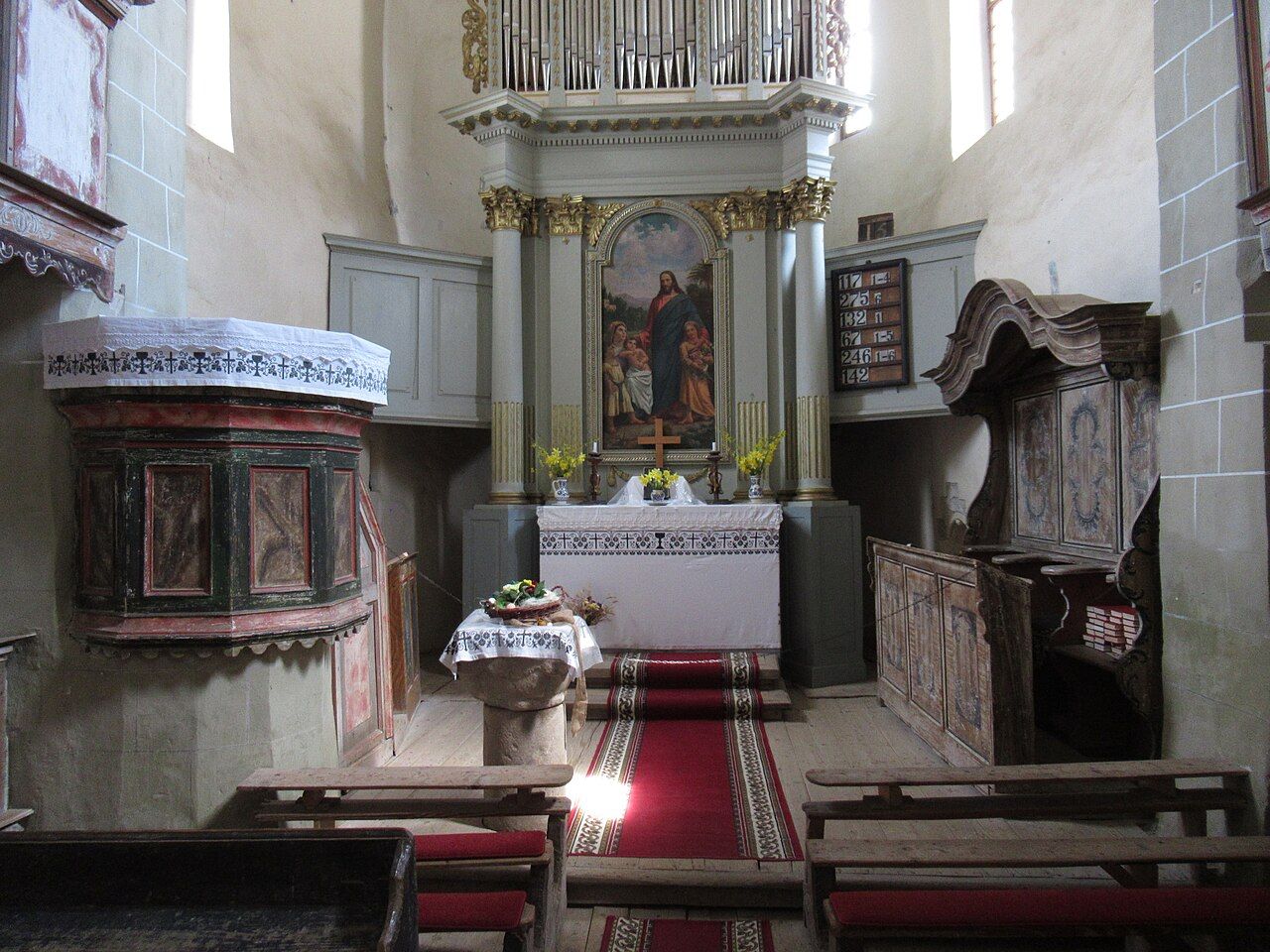
Inside, the church is simple: whitewashed walls, wooden pews, a painted altar and an organ in the gallery. Viscri has become known for the restoration of its village houses using traditional lime, timber and tile, and walking its street gives a sense of what a Saxon village looked like, even though few Saxons live there now.
Prejmer and Hărman
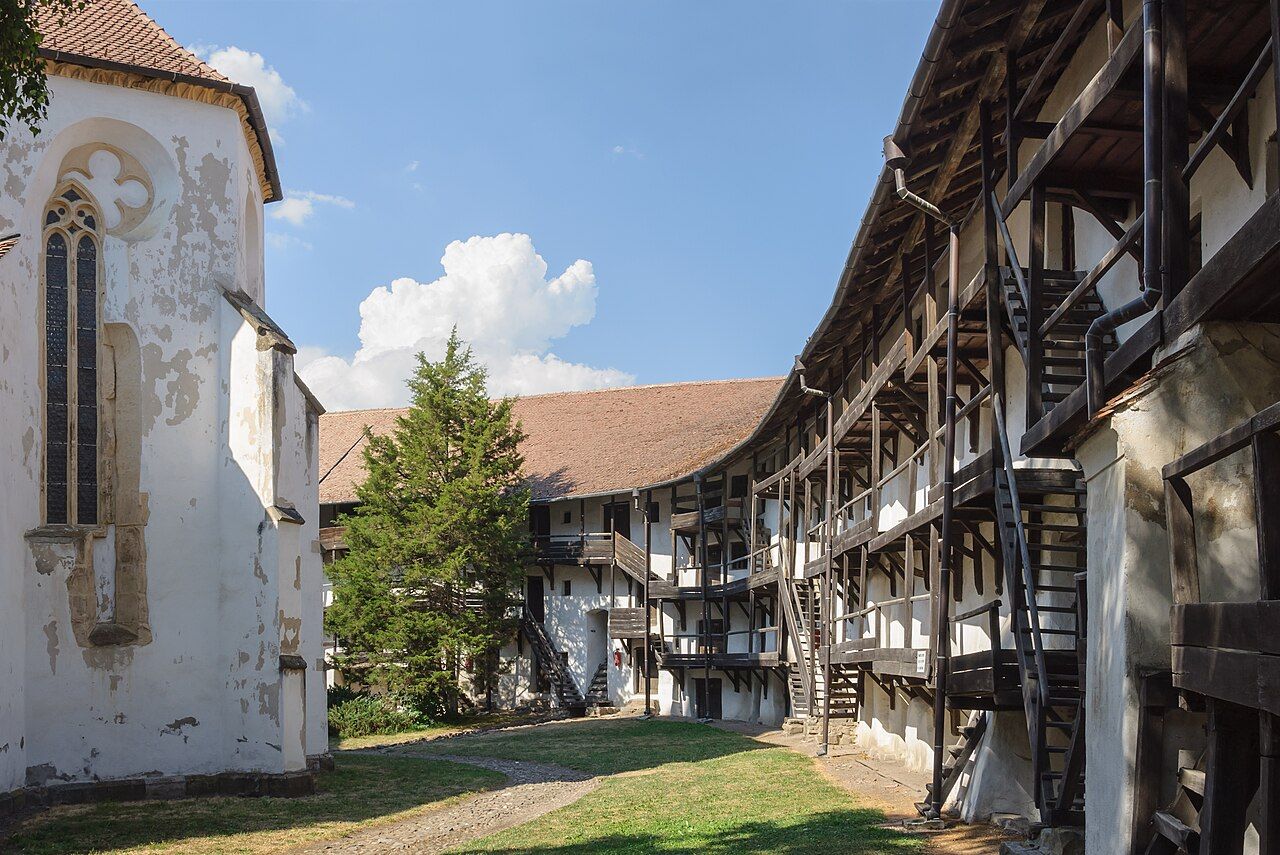
In the Bârsa Land, close to Brașov, the church fortresses are bigger and more massive, built on a flat plain that offered no natural defence. Prejmer has the strongest of all: a thick, rounded ring of walls around a Gothic church in the shape of a cross. On the inside of the walls, rows of small rooms rise in tiers, reached by wooden stairs and galleries; each family had its own, and a village could live inside the walls through a long siege. Prejmer is on the UNESCO list.
Hărman, a few kilometres away, is not on the list but is worth a stop, with a tall church tower and a ring wall with round towers. The other villages on the UNESCO list are Câlnic, Saschiz, Valea Viilor and Dârjiu; Dârjiu is a Székely village whose fortified church belongs to the Hungarian Unitarian community, a reminder that Saxons were not the only people in Transylvania who fortified their churches.
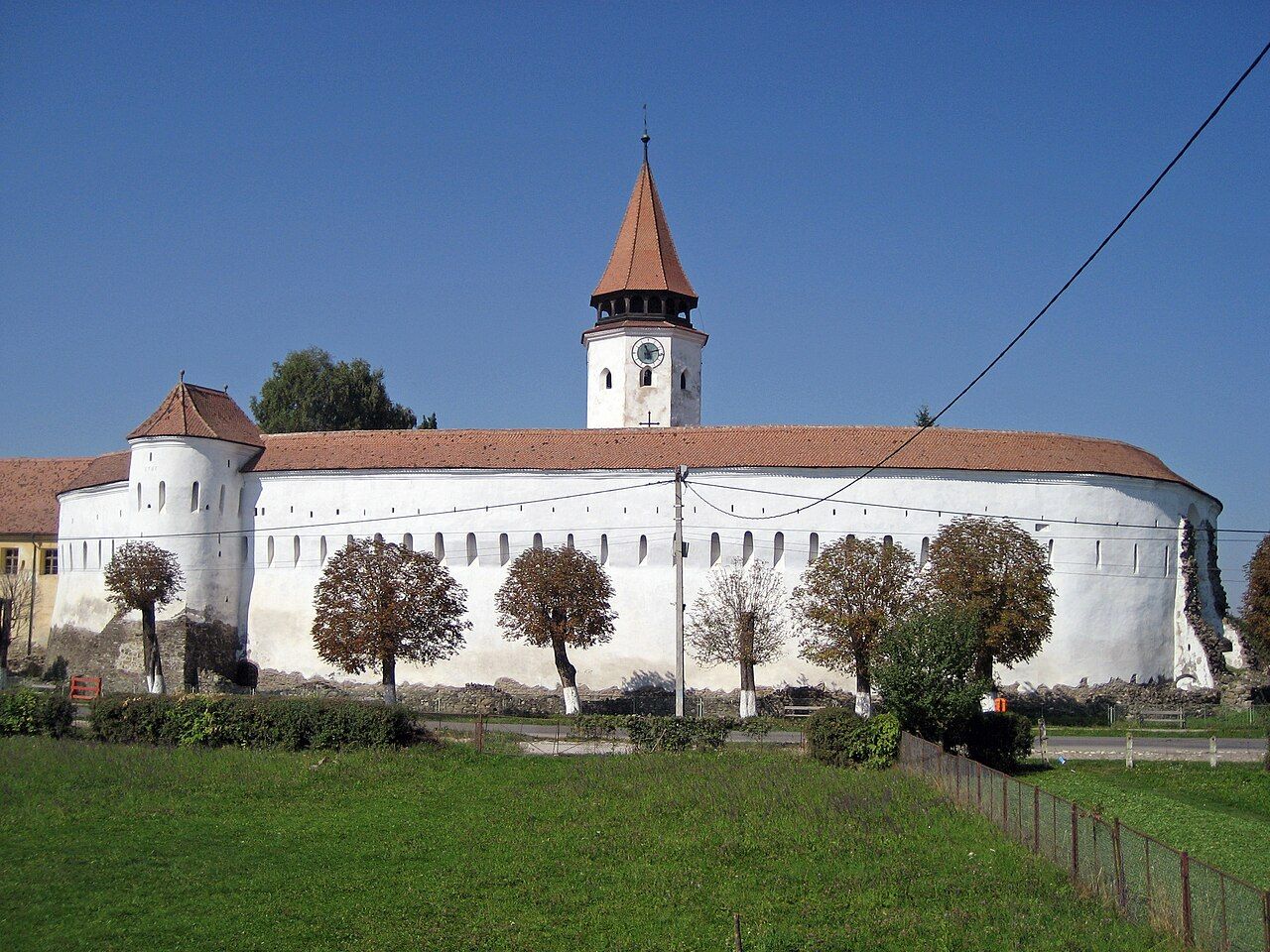
The emptied villages
The Saxon villages have lived through hard decades. In 1945 many ethnic Germans from Romania were deported to labour camps in the Soviet Union. Under communism, land was taken into state farms. Through the 1970s and 1980s many Saxons left for West Germany, and when the borders opened after 1990, most of those who remained followed within a few years. Today the Saxon community numbers a small fraction of what it was, and in many villages only a handful of older people remain.
Their houses were taken over by Romanian and Roma families, sold, left empty or slowly restored. The churches are cared for by the Lutheran church, by local and foreign trusts and by volunteers, and some are in good condition while others are fragile. Visiting is one of the ways they are kept alive, and it is worth doing with care.
Biertan on foot
Many churches are locked. Usually a notice on the gate gives the name or number of the keyholder, often someone living nearby, who will open up for a small fee or donation. Dress modestly, keep your voice down, and remember that some of these are still places of worship with Sunday services, and that their graveyards are still in use. Village roads can be rough or unpaved in places, with horse carts and animals on them: drive slowly. Brașov and Sibiu make good bases for the Bârsa Land and Biertan, and there is more on driving and roads in getting around.
The photographs on this page are credited, with their licences, on threads and photographers.